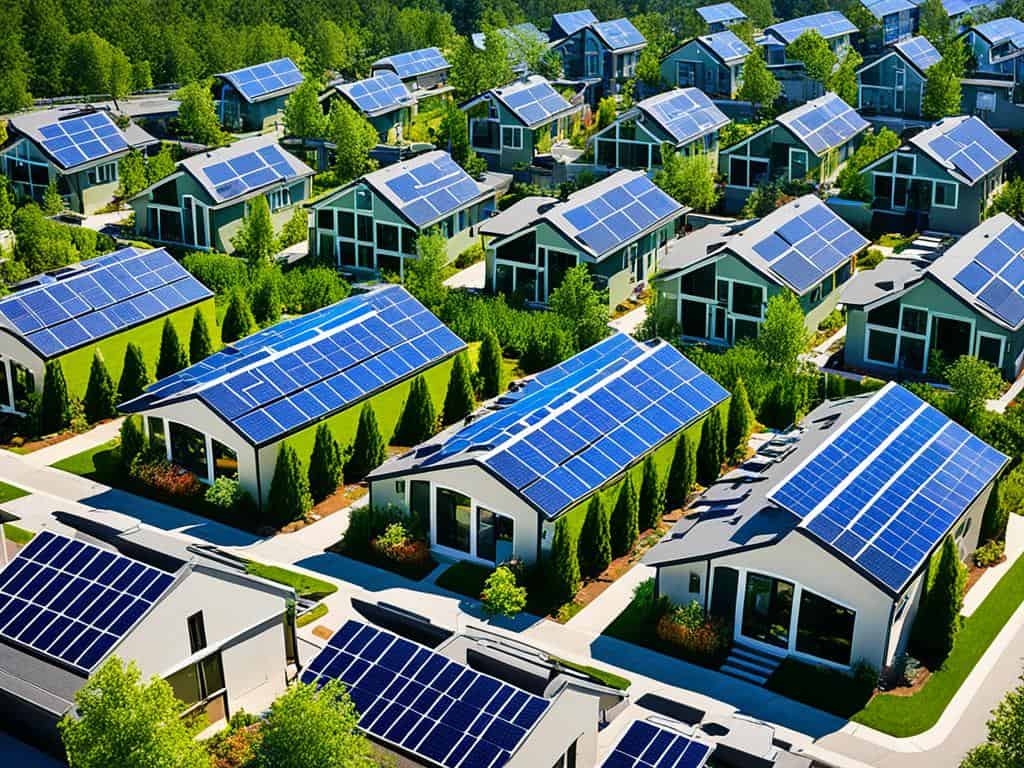
Did you know that the global market for green buildings is valued at a staggering USD 320.98 billion in 2022? And it’s projected to grow at a compound annual growth rate (CAGR) of 14.98% from 2023 to 2032.
The demand for green homes is on the rise, driven by eco-friendly trends and a growing awareness of the need for sustainable living. As the American housing landscape transforms, more and more people are embracing energy-efficient and environmentally friendly housing options.
Key Takeaways:
- The global market for green buildings is worth USD 320.98 billion.
- The demand for green homes is driven by eco-friendly trends and a growing awareness of sustainability.
- Energy efficiency and environmentally friendly housing options are becoming more popular in the American housing landscape.
- The market is projected to grow at a compound annual growth rate (CAGR) of 14.98% from 2023 to 2032.
- Companies like BASF, DuPont, Owens Corning, and Kingspan Group are prominent players in the industry.
Prospects for Green Building Materials Market Growth
The green building materials market holds immense potential for growth in the coming years. With increased government support for sustainable buildings and a rising awareness of climate change, the demand for energy-efficient structures is on the rise. Governments worldwide are implementing policies and regulations that incentivize the construction of green buildings, including tax incentives, subsidies, and grants. This support is driving market growth and encouraging the adoption of green building materials.
One of the key factors contributing to the growth of the market is the growing concern about the environmental impact of buildings. People now recognize the importance of constructing sustainable structures that minimize their carbon footprint. As a result, there is a growing demand for green building materials that offer energy efficiency, reduce waste, and promote sustainable practices.
The rising energy costs and the need for energy independence are also driving the demand for energy-efficient buildings. Green building materials, such as insulation and advanced building systems, help reduce energy consumption and minimize reliance on non-renewable resources. Despite the potentially higher initial construction costs, the long-term cost savings associated with energy-efficient buildings make them a worthwhile investment for individuals and organizations alike.
Overall, the prospects for market growth in the green building materials sector are promising. Increased government support, rising awareness of climate change, and the growing demand for energy-efficient structures are key drivers for market expansion. With the benefits of cost savings, environmental sustainability, and energy efficiency, green building materials are expected to play a crucial role in shaping the future of the construction industry.
Market Insights on Green Building Materials
The market for green building materials is driven by several factors that contribute to its growth and popularity. One of the key drivers is the low maintenance and operational costs associated with these materials. Green building materials are designed to be durable and long-lasting, reducing the need for frequent repairs and replacements. This cost-effectiveness makes them an attractive choice for builders and homeowners alike.
Another factor driving the market for green building materials is the increasing focus on environmental regulations and sustainability. Governments around the world are implementing stricter regulations to mitigate the impact of construction on the environment. Green building materials, such as linoleum, galvalume panels, and fiber-cement composites, are eco-friendly alternatives that help meet these regulations and reduce the carbon footprint of buildings.
Moreover, the surging rate of construction activities in developing regions is fueling the demand for green building materials. As emerging economies experience rapid urbanization and infrastructure development, there is a growing need for sustainable and energy-efficient construction solutions. Green building materials, known for their energy efficiency and reduced environmental impact, are an essential component of these projects.
Green building materials offer numerous benefits beyond cost savings and sustainability. They contribute to energy efficiency by improving insulation and reducing the reliance on artificial cooling and heating systems. Additionally, these materials help enhance indoor air quality by minimizing the use of volatile organic compounds (VOCs) and other harmful substances.
An important aspect of the market analysis is the thorough examination of product types and applications. Green building materials are used in various applications, including framing, insulation, roofing, exterior siding, and interior finishing. By understanding the different product types and applications, businesses can effectively cater to the diverse needs of the market.
Overall, the market for green building materials is experiencing steady growth due to its numerous advantages and the evolving landscape of construction. In the competitive landscape, major players like BASF, DuPont, Owens Corning, and Kingspan Group are driving innovation and setting industry standards. To stay ahead in this market, businesses must align their strategies with market insights on green building materials to meet the demands of environmentally conscious consumers.
Drivers and Restraints of the Green Building Materials Market
The market for green building materials is driven by various market drivers such as increased government support for sustainable buildings, rising awareness of climate change, and the growing demand for energy-efficient structures.
Government policies and incentives, including tax incentives and grants, play a significant role in encouraging the construction of green buildings. These initiatives create a favorable environment for the adoption of green building materials and practices, stimulating market growth.
However, it’s important to acknowledge the market restraints that exist in the green building materials industry. One primary restraint is the high initial cost of construction associated with green buildings. While the initial investment may be higher compared to traditional buildings, green buildings provide long-term cost savings and benefits.
Another restraint is the lack of awareness and education about the benefits of green buildings. Many stakeholders in the construction industry may not fully understand the advantages of using green building materials, including improved energy efficiency, reduced environmental impact, and enhanced occupant health and comfort.
To overcome these restraints, it is crucial to educate stakeholders about the long-term economic and environmental benefits that green building materials offer. By demonstrating the potential cost savings, improved sustainability, and positive impact on occupant well-being, it becomes easier to promote the adoption of green building practices.
Image:
Impact of COVID-19 on the Green Building Materials Market
The COVID-19 pandemic has had a significant impact on the green building materials market. The increased focus on indoor air quality and health has led to a higher demand for sustainable buildings. As people became more aware of the importance of clean and healthy indoor environments, the need for proper ventilation and air filtration systems in buildings became apparent.
Post-pandemic, the market for green building materials is expected to continue growing as governments and businesses prioritize sustainability. The pandemic has highlighted the crucial role that green buildings play in ensuring a healthier environment and reducing the risk of transmission of viruses.
Policies and regulations incentivizing green building construction, coupled with the rising awareness of environmental protection, are expected to drive market growth in the future. The resilience and energy-efficiency of green building materials make them an attractive choice for building owners and developers seeking long-term cost savings and environmental benefits.
Competitive Landscape in the Green Building Materials Market
The green building materials market is characterized by a dynamic and competitive landscape. Companies of all sizes, from industry leaders to startups, are vying for market share and constantly striving for innovation and exceptional performance. This intense competition is driven by several factors, including technological advancements, regulatory changes, and evolving consumer preferences.
Companies operating in this market constantly need to stay ahead of the curve by developing and offering cutting-edge green building materials that meet the ever-changing demands of the industry. This requires an unwavering commitment to research and development, as well as a deep understanding of sustainability practices and green building standards.
The competitive nature of the market presents opportunities for strategic collaborations, consolidations, and takeovers as businesses strive to maintain a competitive edge. By partnering with complementary companies or acquiring innovative startups, established players can enhance their product portfolios and expand their market reach.
The market for green building materials is fiercely competitive, with key players such as BASF, DuPont, Owens Corning, and Kingspan Group leading the way. These companies have established themselves as industry pioneers known for their innovation and strategic initiatives. They continue to invest heavily in research and development to offer high-performance materials that meet the stringent requirements of green building projects.
Future Demand and Key Players in the Green Building Materials Market
The future demand for green building materials is poised to experience significant growth, driven by factors such as technological advancements, changing consumer behaviors, regulatory shifts, and global trends. As the market evolves, several key players are expected to emerge as influential forces, shaping the trajectory of the green building materials industry.
Leading companies recognized for their innovation, market presence, and strategic initiatives include Alumasc Group Plc, Bauder Limited, DuPont, Kingspan Group plc, BASF SE, Owens Corning, and more. These industry giants play pivotal roles in driving the adoption of eco-friendly building materials and shaping the future of sustainable construction.
In a rapidly evolving market, technological advancements play a vital role in meeting the future demand for green building materials. The development of innovative materials and construction methods will pave the way for more sustainable and energy-efficient structures. Companies that invest in research and development to create cutting-edge products will have a competitive advantage in capturing market share.
Changing consumer behaviors also contribute to the growing demand for green building materials. With increased awareness of climate change and environmental concerns, consumers are actively seeking eco-friendly options for their homes and buildings. They prioritize energy efficiency, renewable materials, and sustainable practices, creating a market demand that fuels the growth of the green building materials industry.
Regulatory shifts and global trends further drive the future demand for green building materials. Governments worldwide are implementing policies and regulations that promote the construction of sustainable buildings. These include incentives such as tax credits and grants, aiming to accelerate the adoption of green building practices. Additionally, global trends like urbanization, population growth, and the need for energy independence propel the demand for energy-efficient and environmentally friendly construction materials.
As the future unfolds, the green building materials market will continue to expand, driven by technological advancements, changing consumer behaviors, regulatory shifts, and global trends. Key players in the industry will play a crucial role in shaping the future of sustainable construction, driving innovation, and meeting the increasing demand for eco-friendly building materials.
Conclusion
The market demand for green homes in the American housing landscape is on the rise, driven by various factors, such as increased government support, a growing awareness of climate change, and the need for energy-efficient buildings. With the market for green building materials expected to thrive in the coming years, there are ample opportunities for businesses to capitalize on eco-friendly trends and contribute to a sustainable future.
One of the key drivers of this market demand is the low maintenance costs associated with green homes. These homes incorporate energy-efficient technologies and sustainable materials, resulting in reduced utility expenses and long-term savings for homeowners. Additionally, environmental regulations and the surging rate of construction activities further bolster the market, creating a favorable landscape for the adoption of green building practices.
The COVID-19 pandemic has also underscored the importance of sustainability and indoor air quality in the housing sector. As people prioritize their health and well-being, the demand for homes with proper ventilation and clean indoor environments has increased significantly. This has further pushed the market towards green homes, which offer improved air quality and reduced carbon footprint.
To meet the market demand and contribute to the eco-friendly trends, businesses operating in the housing industry should focus on innovation, education, and collaboration. By developing and promoting sustainable building practices, businesses can position themselves for long-term success and make a positive environmental impact. The future of the green homes market holds great potential, and by embracing the opportunities it presents, we can create a more sustainable and greener future for all.
FAQ
What is the value of the global green buildings market in 2022?
The global market for green buildings is valued at USD 320.98 billion in 2022.
What is the projected compound annual growth rate (CAGR) for the green buildings market from 2023 to 2032?
The green buildings market is projected to have a CAGR of 14.98% from 2023 to 2032.
What are green building materials?
Green building materials improve sustainability and efficiency in design, construction, maintenance, and renovation. They are highly energy-efficient and made from renewable waste sources.
What drives the market for green building materials?
The market for green building materials is driven by factors such as low maintenance and operational costs, environmental regulations, and the surging rate of construction activities.
Who are the prominent players in the green building materials industry?
Prominent players in the green building materials industry include BASF, DuPont, Owens Corning, Kingspan Group, and more.
What are the product types and applications analyzed in the green building materials market?
The market is segmented by product type (linoleum, galvalume panels, fiber-cement composites, etc.) and application (framing, insulation, roofing, etc.).
What factors are driving the future growth of the green building materials market?
The future growth of the green building materials market is driven by factors such as increased government support for sustainable buildings, rising awareness of climate change, and the growing demand for energy-efficient structures.
What are the market restraints for green building materials?
The market restraints for green building materials include the high initial cost of construction and the lack of awareness and education about the benefits of green buildings.
How has the COVID-19 pandemic impacted the green building materials market?
The COVID-19 pandemic has increased the focus on indoor air quality and health, leading to a higher demand for sustainable buildings. It has also highlighted the importance of proper ventilation and air filtration systems.
Who are the key players in the green building materials market?
Key players in the green building materials market include BASF, DuPont, Owens Corning, Kingspan Group, and more.
What factors will drive the future demand for green building materials?
The future demand for green building materials will be driven by factors such as technological advancements, changing consumer behaviors, regulatory shifts, and global trends.
Source Links
- https://www.globenewswire.com/en/news-release/2023/05/23/2673981/0/en/Green-Buildings-Market-Projected-to-Grow-at-a-CAGR-of-9-50-Reaching-USD-1312-12-Billion-During-Forecast-Period-2023-and-2030-Report-by-Market-Research-Future-MRFR.html
- https://www.linkedin.com/pulse/green-building-materials-market-growth-factors-size-trends-sharma
- https://www.linkedin.com/pulse/green-building-materials-market-surge-navigating-90rtf
