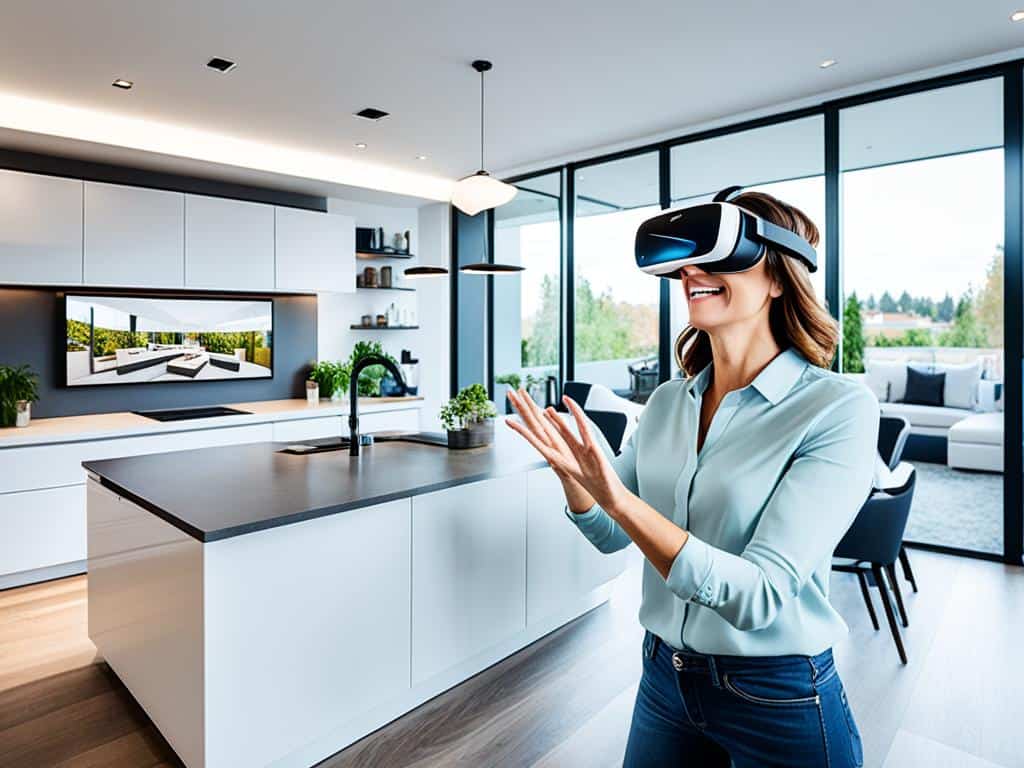
Did you know that the global virtual reality (VR) market value is projected to reach a staggering $252.16 billion by 2028? This surprising statistic highlights the immense potential and impact of VR technology in the real estate industry. Through immersive viewing experiences and groundbreaking advancements, VR is transforming the way property tours are conducted and revolutionizing the real estate business as a whole.
Key Takeaways:
- Virtual reality is rapidly growing in the real estate industry, with a projected market value of $252.16 billion by 2028.
- Immersive viewing experiences provided by VR technology are reshaping property tours and sales.
- Real estate professionals across various roles can benefit from adopting VR technology.
- VR is being used in property showings, home staging, architectural visualization, and the emerging virtual real estate market.
- Embracing VR in real estate marketing provides a competitive advantage and delivers immersive property experiences.
Property Showings: Enhancing the Buying Experience
The introduction of virtual reality (VR) has transformed property showings in the real estate industry. By utilizing 3-D tours and VR technology in real estate listings, buyer engagement has significantly increased, resulting in a multitude of benefits for agents and sellers alike.
Studies have shown that homebuyers are 95% more likely to contact an agent after experiencing a property through a 3-D tour. This heightened engagement can be attributed to the immersive nature of VR property showcases, allowing buyers to virtually explore the space as if they were physically present.
VR property showcases not only captivate and engage potential buyers, but they also contribute to increased property prices and faster sales. Properties that incorporate 3-D tours and VR technology spend less time on the market compared to traditional listings. Additionally, these properties sell at a higher price, with an average increase of 9% compared to their counterparts.
By adopting VR technology for property showings, real estate professionals can provide a more interactive and immersive experience for buyers. This enhanced experience translates to improved sales and marketing outcomes, ultimately achieving higher property prices and increased buyer engagement.
Creating an Immersive Experience
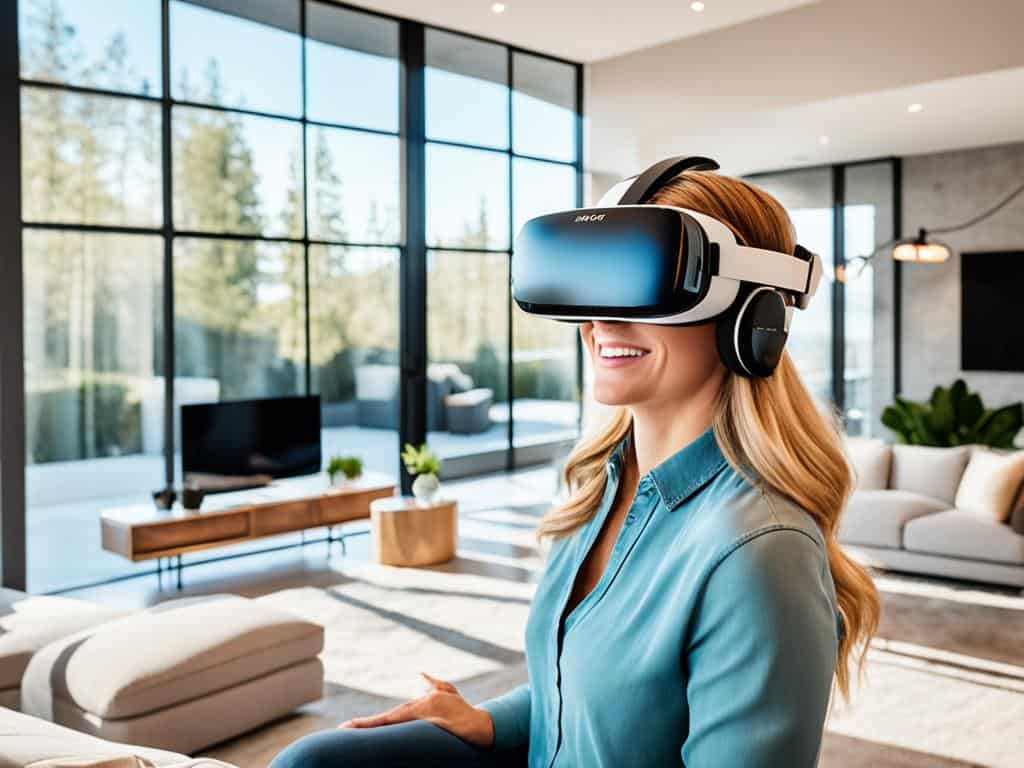
VR property showcases take the concept of virtual tours to a new level by providing a fully immersive experience. Buyers can explore every aspect of a property, from room to room, gaining a comprehensive understanding of the space and its features. The realistic representation of the property through VR technology allows buyers to visualize themselves living in the space, thus increasing their emotional connection and interest in the property.
This level of engagement and personalization sets VR property tours apart from traditional property showings. It enables buyers to make informed decisions and eliminates any uncertainties they may have had about the property. The use of VR technology showcases the property’s unique qualities, highlighting its potential and value.
In conclusion, VR property showcases and 3-D tours have revolutionized the way properties are shown and sold. The immersive experience they offer significantly increases buyer engagement, leading to higher property prices and faster sales. Real estate professionals who embrace VR technology for property showings gain a competitive advantage in the market and provide buyers with an unforgettable journey through virtual property exploration.
Virtual Home Staging: Cost-effective and Customizable
Virtual home staging is a revolutionary application of virtual reality (VR) in the real estate industry. Traditional staging can be a costly endeavor, with the average cost ranging from $2,000 to $2,400 per month for a 2,000-square-foot home. However, VR provides a cost-effective alternative by offering virtual staging that is both free and eliminates the need for physical furniture.

Virtual staging offers unparalleled flexibility, allowing real estate professionals to customize interior design styles to cater to the preferences of potential buyers. Whether it’s a sleek modern look or a cozy traditional aesthetic, virtual staging can bring any design vision to life.
Realtors, property managers, and investors in rental properties can greatly benefit from virtual home staging. By reducing operating expenses, virtual staging provides significant cost savings. Additionally, virtual staging creates a visually captivating environment that attracts interested renters faster, increasing the speed at which properties are leased.
Embrace the power of virtual home staging to create cost-effective and customizable interior designs that appeal to a wide range of potential buyers. With virtual reality technology, you can transform any space into a stunning visualization that showcases the true potential of a property.
Architectural Visualization: Selling Properties Before Construction
Selling properties that have not been built yet can be challenging. Buyers struggle to envision the final product and often find it difficult to make a purchase without a tangible representation. However, virtual reality (VR) offers a groundbreaking solution to this problem. Through virtual architectural visualizations, developers and agents can now showcase properties that are still under construction, providing buyers with realistic representations of both the exterior and interior designs.
By leveraging virtual architectural visualizations, real estate professionals can stimulate sales and increase purchases of properties that are not yet ready. When buyers can immerse themselves in a virtual walkthrough and envision the space, they develop a deeper understanding of the property’s potential. This enhanced visualization experience bridges the gap between imagination and reality, inspiring confidence and trust in the buyer’s decision-making process.
The use of virtual architectural visualizations has proven to be highly effective in driving increased sales. With the ability to virtually explore a property before it is even built, potential buyers gain a comprehensive understanding of the space, layout, and overall ambiance. This level of engagement significantly increases the likelihood of making a purchase, leading to higher conversion rates and improved overall sales performance.
Benefits of Virtual Architectural Visualizations:
- Visualizing the Unbuilt: Virtual architectural visualizations enable buyers to see the potential of a property before it comes to life, helping them make informed decisions and imagine themselves in the space.
- Precise Representation: These visualizations accurately portray the design and aesthetics of the property, showcasing every detail and allowing buyers to appreciate the craftsmanship and quality.
- Cost and Time Savings: By showcasing properties virtually, developers can reduce marketing costs associated with physical models and accelerate the sales process, ultimately resulting in significant time and cost savings.
- Increased Engagement: Virtual architectural visualizations captivate potential buyers, encouraging them to spend more time exploring the property and fostering an emotional connection that can lead to a favorable buying decision.
Incorporating virtual architectural visualizations into the pre-construction stage of a project offers tremendous value in terms of marketing and sales. Not only does it enhance buyer experiences and improve overall sales performance, but it also positions real estate professionals as industry leaders and innovators, driving increased brand reputation and customer trust.

Conclusion
Virtual reality (VR) and augmented reality (AR) have revolutionized the real estate marketing landscape, offering immersive property experiences and reshaping the way buyers and investors interact with real estate listings. The integration of VR and AR technologies has not only upgraded property viewings but has also provided interactive property exploration, enhanced buyer experiences, and ultimately boosted property sales.
Real estate professionals who embrace VR and AR in their marketing strategies gain a competitive advantage in a crowded market, allowing them to deliver unforgettable journeys for buyers. By incorporating these cutting-edge technologies, real estate professionals can attract more clients, close deals more effectively, and stay at the forefront of technological advancements in the ever-evolving real estate industry.
Embracing VR and AR is not just the future of real estate marketing, but also the present. These technologies offer exciting opportunities for growth and success. By leveraging the power of VR and AR, real estate professionals can create immersive property experiences that captivate buyers and provide them with a deeper understanding and connection to the properties they are considering.
Whether it’s virtual property tours, interactive floor plans, or virtual home staging, VR and AR have become essential tools in the real estate industry. These technologies allow buyers to explore and visualize properties in a way that was never before possible. By harnessing the potential of VR and AR, real estate professionals can differentiate themselves, stand out from the competition, and drive more successful sales in the dynamic and highly competitive real estate market.
FAQ
How is virtual reality being used in the real estate industry?
Virtual reality is being used in the real estate industry to offer immersive viewing experiences, transform property tours and sales, and enhance property showcases.
What are the benefits of using VR technology in property showings?
Using VR technology in property showings can increase buyer engagement, with homebuyers being 95% more likely to contact an agent after viewing a property with a 3-D tour. It also reduces time on the market and can result in a 9% increase in selling price compared to traditional listings.
How does virtual home staging benefit real estate professionals?
Virtual home staging offers a cost-effective alternative to traditional staging, as it is free and eliminates the need for physical furniture. It also allows for the customization of interior design styles to cater to potential buyers’ preferences, reducing operating expenses and attracting interested renters faster.
How does virtual reality help with selling properties that have not been built yet?
Virtual reality provides virtual architectural visualizations that offer realistic representations of both the exterior and interior of properties yet to be constructed. This allows developers and agents to showcase properties before they are built, stimulating sales and increasing purchases of properties that are not yet ready.
What are the advantages of incorporating virtual reality and augmented reality in real estate marketing strategies?
By incorporating virtual reality and augmented reality in real estate marketing strategies, real estate professionals gain a competitive edge in the market and deliver immersive property experiences. This allows for interactive property exploration, enhanced buyer experiences, and boosted property sales.
Source Links
- https://www.nar.realtor/blogs/emerging-technology/virtual-reality-in-real-estate-technology
- https://www.linkedin.com/pulse/impact-virtual-reality-vr-augmented-ar-real-estate-marketing-r16uc?trk=article-ssr-frontend-pulse_more-articles_related-content-card
- https://www.forbes.com/sites/forbestechcouncil/2022/10/05/5-ways-to-use-virtual-reality-in-your-real-estate-business/
