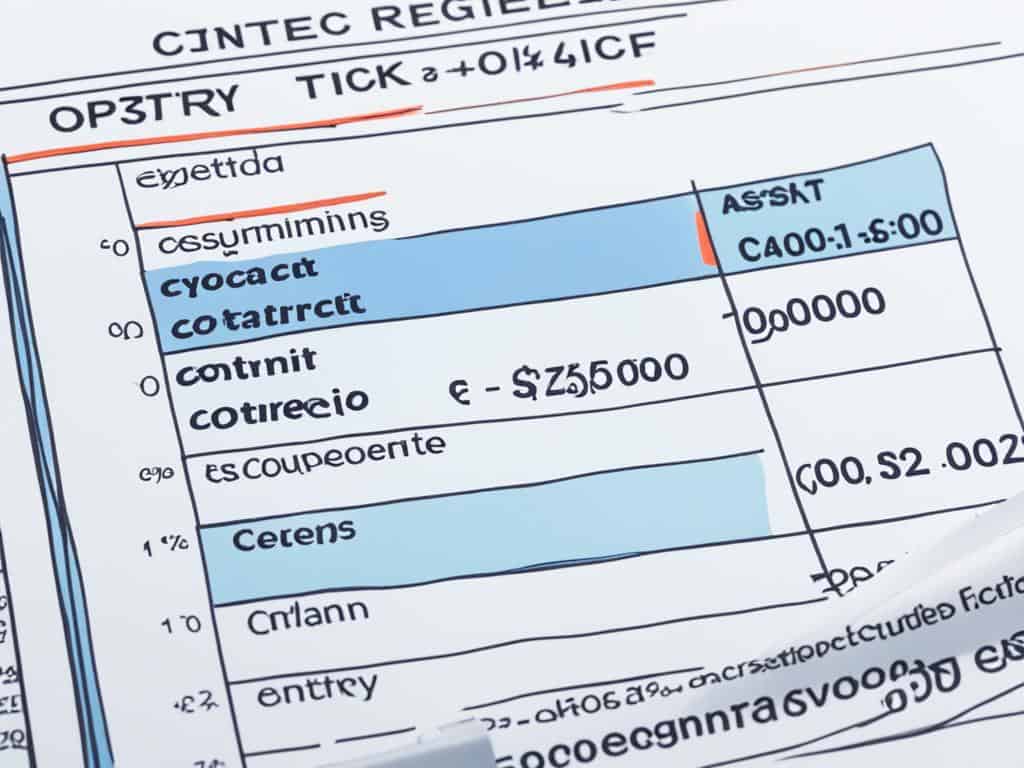
Futures trading is a massive industry, with trillions of dollars in contracts traded annually. In fact, according to the Futures Industry Association (FIA), the total number of futures contracts traded globally in 2020 reached a staggering 24.25 billion contracts. This statistic alone highlights the significant role that futures contracts play in the financial markets.
A futures contract is a standardized agreement that allows investors to buy or sell a specific asset at a predetermined price and time in the future. These contracts are essential for facilitating efficient trading on futures exchanges, as they provide a common framework for buyers and sellers. Understanding the specifications of futures contracts is crucial for anyone venturing into the world of futures trading.
Key Takeaways:
- Futures contracts are legal agreements to buy or sell assets at a predetermined price and time.
- These contracts are standardized for quality and quantity.
- Buyers are obligated to purchase and receive the underlying asset, while sellers are obligated to provide and deliver the asset.
- Futures contracts allow investors to speculate on price movements or hedge against unfavorable price changes.
- They cover a wide range of commodities, currencies, energy, and securities.
Application of Futures Contracts
Futures contracts serve as valuable tools for two main categories of market participants: hedgers and speculators. These participants utilize futures contracts for different purposes, including price hedging and price speculation.
Hedgers
Hedgers are individuals or businesses that have a direct interest in the underlying assets of futures contracts. They use these contracts as a means to manage and mitigate their exposure to price fluctuations. For example, producers of commodities may use futures contracts to guarantee a favorable selling price in the future, protecting themselves from potential market downturns. Similarly, purchasers of commodities can use futures contracts to hedge against the risk of price increases, ensuring a predetermined buying price.
“Futures contracts allow hedgers to establish a fixed price for their commodities, providing stability and reducing risks associated with uncertain market conditions.”
Speculators
On the other hand, speculators do not have a direct interest in the underlying assets of futures contracts. They engage in futures trading purely for the purpose of profiting from price movements. Speculators analyze market trends, patterns, and other relevant factors to predict the direction in which prices might move. By taking positions in futures contracts, speculators aim to capitalize on these price fluctuations and generate returns.
“Speculators use futures contracts to seize opportunities presented by changing market conditions, taking advantage of price volatility to make profitable trades.”
Overall, futures contracts serve as a vital tool for both hedgers and speculators. Hedgers use these contracts to protect against unfavorable price changes, while speculators use them to profit from price movements. Their distinct but interconnected roles contribute to the liquidity and efficiency of the futures market, enabling various participants to achieve their objectives.
Types of Futures Contracts
Futures contracts can be classified into various categories based on the type of commodity or asset they represent. These categories include agricultural futures, energy futures, metal futures, currency futures, and financial futures.
Agricultural futures
Agricultural futures contracts are designed to enable trading of commodities such as grain, coffee, sugar, livestock, and other agricultural products. These contracts provide market participants with a mechanism to speculate on or hedge against price volatility in the agricultural sector.
Energy futures
Energy futures contracts involve the trading of commodities related to energy sources. Examples of energy futures include contracts for crude oil, natural gas, and various other energy products. These contracts allow participants to take advantage of price movements in the energy market.
Metal futures
Metal futures contracts are traded for industrial metals such as gold, steel, copper, and other metallic commodities. Market participants use metal futures to benefit from price fluctuations in the metals market or protect against potential losses.
Currency futures
Currency futures contracts provide exposure to changes in exchange rates and interest rates of different national currencies. These contracts allow individuals and businesses to manage risks associated with foreign currency fluctuations and engage in speculation on currency price movements.
Financial futures
Financial futures represent the future value of a security or index, such as the S&P 500 or Treasury bonds. These contracts enable investors to speculate on the future performance of financial instruments and manage risk in their investment portfolios.

Futures Contract vs. Forward Contract
While futures contracts and forward contracts serve similar functions, there are key differences between them. Futures contracts are standardized agreements traded on an exchange, while forward contracts are private agreements between two parties.
Futures contracts have predetermined terms and specifications, regardless of the counterparty involved, while forward contracts can be customized based on the needs of the buyer and seller. Futures contracts are subject to more regulation and are accessible to retail investors, while forward contracts are less regulated and often traded over-the-counter. These distinctions make futures contracts a more widely used and easily accessible investment tool.
“Futures contracts allow for standardized trading, increasing market liquidity and transparency. Forward contracts, on the other hand, offer greater flexibility and customization to meet specific needs.”
Mechanics of a Futures Contract
When it comes to trading futures contracts, understanding the mechanics is crucial. Let’s dive into the key aspects that make up these financial instruments.
Pricing Futures Contracts
Pricing futures contracts involves complex mathematical models. Factors such as the current spot price, risk-free rate of return, time to maturity, storage costs, dividends, dividend yields, and convenience yields are taken into account. These models help determine the fair value of a futures contract.
Contract Size
Each futures contract represents a specific quantity or volume of the underlying asset. Contract sizes can vary depending on the commodity or asset being traded. For example, agricultural futures contracts may be measured in bushels, while financial futures contracts may be based on the face value of a security or index.
Delivery Specifications
Delivery specifications outline the procedures for physical or cash settlement upon contract expiration. It specifies how and where the delivery of the underlying asset will occur. These specifications are crucial for both buyers and sellers to ensure a smooth and efficient settlement process.
Trading Hours
Trading hours for futures contracts vary across different markets. Some markets have shorter trading days with specific opening and closing times, while others offer round-the-clock trading. It’s important for traders to be aware of the trading hours to effectively manage their positions and execute trades at the desired time.
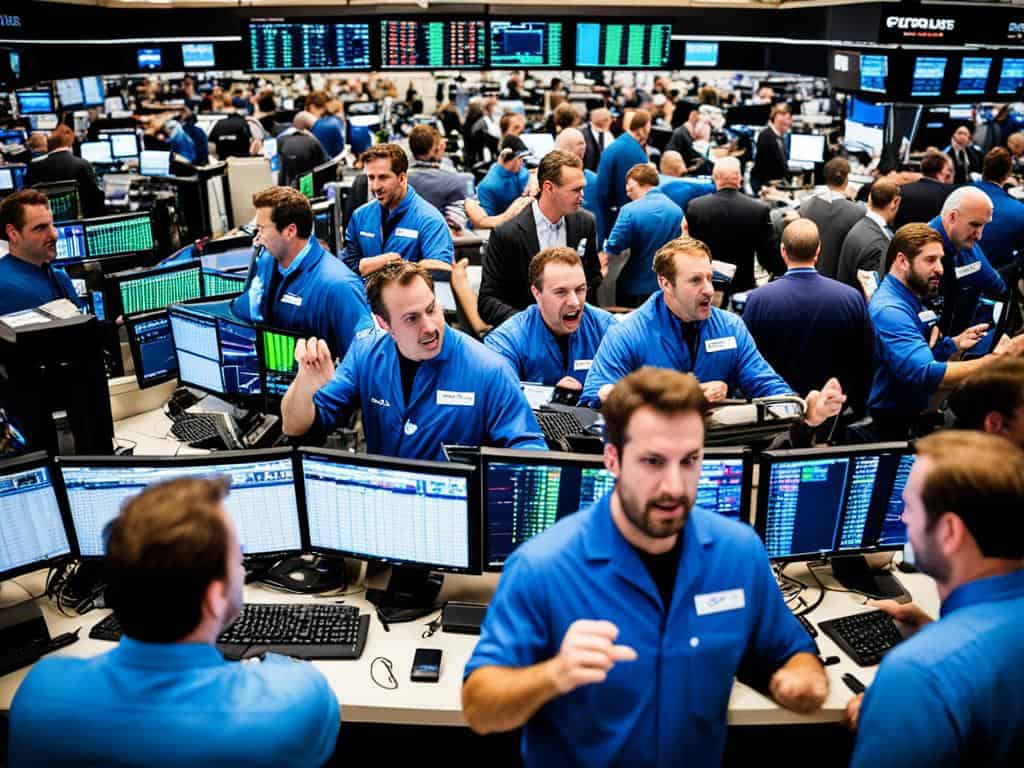
Understanding the pricing, contract size, delivery specifications, and trading hours of futures contracts is essential for anyone looking to navigate the futures market. Armed with this knowledge, traders can make informed decisions and effectively manage their risk.
Trading Futures Contracts
Retail traders and portfolio managers have the opportunity to profit from price moves in futures contracts without the need to receive or deliver the underlying asset. As a retail trader, I can enter and exit positions before the contract expires, allowing me to capture profits from price movements and take advantage of market opportunities.
One of the key aspects to consider when trading futures contracts is margin requirements and maintenance margin levels. Margin refers to the initial payment required to control a futures contract. It acts as a deposit and enables me to take a larger trading position than the capital I have on hand. Maintenance margin, on the other hand, represents the additional funds I need to maintain in my account to cover potential losses.
Having a clear understanding of margin and maintenance margin is crucial to avoid margin calls and ensure that my trading account remains in good standing. It’s important to monitor margin levels regularly and make sure I have enough funds to support my positions.
To make informed trading decisions, I employ various trading strategies based on my expectations of price increases or decreases. These strategies involve buying or selling futures contracts depending on market trends and indicators. By analyzing charts, patterns, and market sentiment, I can identify potential entry and exit points, allowing me to maximize profits and minimize risks.
Trading futures contracts requires discipline, knowledge, and risk management. I constantly monitor market conditions, stay updated with relevant news and events, and adjust my trading strategies accordingly. It’s essential to have a clear plan in place, including profit targets and stop-loss orders, to manage risk effectively and maintain a consistent trading approach.
Futures Contract Specifications Across Markets
Futures contract specifications can vary significantly across different markets, encompassing a wide range of commodities and assets. Understanding these specifications is vital for traders and investors looking to engage in futures trading and effectively manage their positions. Here, I will outline some key elements of futures contract specifications across various markets, including contract sizes, contract months, tick value, delivery specifications, and trading hours.
Contract Sizes
The contract size of a futures contract represents the quantity or value of the underlying asset that the contract covers. This can vary depending on the specific market. For example, in agricultural futures, contract sizes are often denominated in bushels or tonnes for products such as corn or wheat. In financial futures, contract sizes may be based on the face value of the underlying bond or index.
Contract Months
Contract months refer to the specific months in which futures contracts expire. Each market can have its own set of contract months, with some offering contracts that expire monthly, while others may have contracts expiring quarterly or even multiple times within a month. These contract months provide traders with flexibility in choosing the timeframe for their trading strategies.
Tick Value
The tick value represents the minimum price increment by which a futures contract can fluctuate. It varies across different markets and can have a significant impact on the profitability and risk management of trading positions. Traders need to be aware of the tick value to make informed decisions regarding position sizing and potential profit or loss calculations.
Delivery Specifications
Delivery specifications outline the details of how physical or cash settlement is executed upon the expiration of a futures contract. Depending on the market, delivery methods may include the physical delivery of the underlying asset, such as in agricultural or energy futures, or cash settlement based on an index or reference rate, as in financial futures. These specifications provide traders with clarity on the possible outcomes and obligations associated with their futures positions.
Trading Hours
The trading hours of futures contracts can vary across different markets and exchanges. Some markets have designated trading hours during the day, while others offer extended or even round-the-clock trading sessions. Traders need to be aware of the specific trading hours to ensure they can enter and exit positions when desired and react to market events in real-time.
Having a solid understanding of futures contract specifications across markets is crucial for anyone looking to engage in futures trading. By considering contract sizes, contract months, tick value, delivery specifications, and trading hours, investors can better navigate the intricacies of different futures markets and make informed trading decisions.
Conclusion
Futures contracts are an integral part of the financial markets, providing investors with the opportunity to engage in trading various commodities, financial instruments, and assets. To fully benefit from these contracts, it is crucial to have a comprehensive understanding of their specifications. By familiarizing themselves with key details such as contract size, expiration dates, and tick value, investors can make well-informed decisions and effectively manage their risk.
Whether used for hedging or speculation, futures contracts offer unique opportunities for profit and risk management. Those who approach trading futures contracts with a solid understanding of the market dynamics can take advantage of price fluctuations to generate substantial returns. However, it is important to note that futures trading involves inherent risks and should be approached with caution and proper risk management strategies in place.
By staying informed about market trends, studying charts and indicators, and implementing risk management techniques, investors can navigate the futures market successfully. The ability to anticipate price movements, coupled with effective risk management measures, can help traders maximize their potential profits and minimize potential losses.
In conclusion, futures contracts provide a platform for investors to participate in the trading of commodities, financial instruments, and other assets. Understanding the specifications of these contracts is essential for anyone considering entering the futures market. With a solid grasp of the contract details and proper risk management strategies, investors can capitalize on the opportunities presented by futures trading and achieve their financial goals.
FAQ
What is a futures contract?
A futures contract is a legal agreement to buy or sell a commodity, asset, or security at a predetermined price and time in the future.
Who uses futures contracts?
Futures contracts are used by hedgers, such as producers or purchasers of underlying assets, and speculators who want to profit from price movements.
What are the types of futures contracts?
The types of futures contracts include agricultural futures, energy futures, metal futures, currency futures, and financial futures.
How do futures contracts differ from forward contracts?
Futures contracts are standardized agreements traded on an exchange, while forward contracts are private agreements between two parties.
How are futures contracts priced?
Futures contracts are priced using mathematical models that consider factors such as current spot price, risk-free rate of return, time to maturity, and storage costs.
Can futures contracts be traded for profit without receiving or delivering the underlying asset?
Yes, retail traders and portfolio managers often trade futures contracts purely for profit, without the intention of receiving or delivering the underlying asset.
What are some key specifications of futures contracts?
Futures contracts vary in contract sizes, contract months, tick value, delivery specifications, and trading hours.
Why is it important to understand futures contract specifications?
Understanding futures contract specifications is crucial for making informed trading decisions and effectively managing risk in the futures market.
Source Links
- https://www.investopedia.com/terms/f/futurescontract.asp
- https://www.britannica.com/money/futures-contract-specifications
- https://www.barchart.com/futures/contract-specifications
