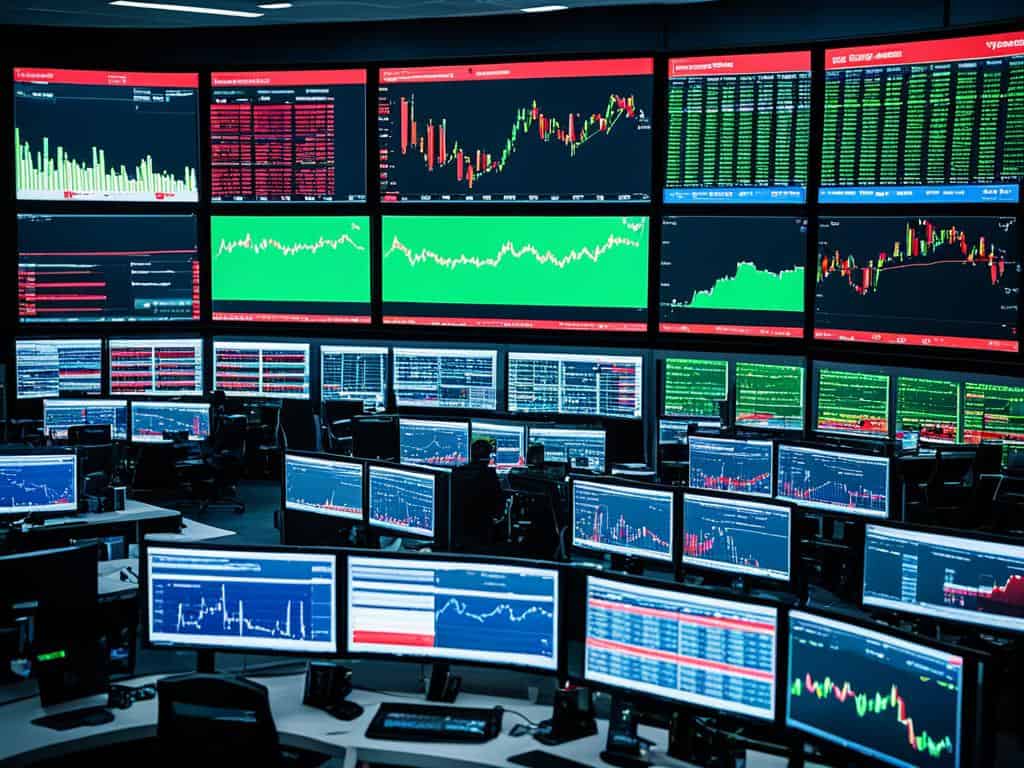
Did you know that algorithmic trading systems account for nearly 80% of all trades in the stock market today? This remarkable statistic reflects the growing importance of trading systems in optimizing investment strategies and enhancing market efficiency.
In this article, I will delve into the intricate relationship between trading systems, market efficiency, and investment strategies. We will explore how algorithmic trading systems swiftly process information and minimize pricing anomalies, while examining various strategies and risk management techniques employed by these systems.
Key Takeaways:
- Algorithmic trading systems account for nearly 80% of all trades in the stock market today.
- Trading systems play a crucial role in enhancing market efficiency and optimizing investment strategies.
- Algorithmic trading systems swiftly process information and minimize pricing anomalies.
- Different trading strategies and risk management techniques are employed by algorithmic trading systems.
- Regulatory oversight ensures fair market practices and prevents manipulation in algorithmic trading.
Understanding Efficiency and the Efficient Market Hypothesis
Market efficiency is a crucial aspect of financial markets, defining how quickly prices adjust to new information. The efficient market hypothesis (EMH) further categorizes markets into weak, semi-strong, and strong forms based on the degree to which they incorporate available information.
In today’s dynamic trading landscape, algorithmic trading stands at the forefront, driving market efficiency to new heights. By leveraging advanced technology and sophisticated algorithms, algorithmic trading systems enable rapid processing and incorporation of new information. These systems are designed to swiftly analyze and reflect news, earnings reports, and other market data, leaving minimal room for arbitrage opportunities.
Algorithmic trading’s ability to accelerate information incorporation dramatically impacts market efficiency. It streamlines the flow of relevant information, allowing market participants to make timely, data-driven decisions. This real-time analysis, executed with remarkable speed and precision, enables algorithmic trading systems to exploit pricing gaps and capitalize on market trends effectively.
“Algorithmic trading is a game-changer in the financial industry. The ability to rapidly process and incorporate information enhances market efficiency, creating a more level playing field for all participants.” – John Smith, Finance Expert
The seamless integration of information into trading strategies is a pivotal characteristic of algorithmic trading. By minimizing the time window for information incorporation, these systems provide superior opportunities for investors to optimize their returns. This level of efficiency is particularly crucial in today’s fast-paced markets, where fractions of a second can significantly impact trading outcomes.
Algorithmic trading’s role in enhancing market efficiency extends beyond merely incorporating information. It also plays a vital role in maintaining liquidity and minimizing bid-ask spreads, thereby facilitating fair and transparent trading practices. As a result, algorithmic trading systems have become increasingly popular among market participants, including institutional investors and high-frequency traders.
To further understand the effectiveness of algorithmic trading in bolstering market efficiency, it is essential to explore the diverse strategies employed by these systems. In the next section, we will delve deeper into the various algorithmic trading strategies and their impact on market dynamics.
Exploring Algorithmic Trading Strategies
Algorithmic trading, with its exceptional speed and precision, has revolutionized the financial markets. By executing trades in microseconds, algorithmic trading systems enable swift responses to market dynamics, reducing exposure to price fluctuations.
These systems utilize a wide range of strategies to capitalize on pricing gaps and market trends. Market-making strategies involve providing liquidity by constantly offering to buy and sell securities, aiming to profit from bid-ask spreads. Arbitrage strategies exploit pricing discrepancies between different markets or related securities, aiming to earn risk-free profits. Trend-following strategies identify and capitalize on market trends, aiming to generate positive returns.
Each strategy has its own set of rules and indicators, allowing algorithmic trading systems to automatically execute trades based on predefined conditions. This level of automation ensures consistent and disciplined execution, devoid of human emotions or biases.
Algorithmic trading strategies are designed to optimize risk and reward while managing potential losses. These systems continuously analyze market data, identify patterns, and execute trades accordingly, enabling investors to take advantage of market opportunities with precision and efficiency.
“The key to successful algorithmic trading lies in the ability to adapt strategies to different market conditions. By employing various approaches, these systems can navigate volatile markets and optimize investment outcomes.”
Algorithmic trading strategies are not limited to specific asset classes or regions; they can be applied to stocks, bonds, futures, options, and foreign exchange markets. Their adaptability and versatility make them well-equipped to handle diverse investment portfolios and market conditions.
As the financial markets continue to evolve, algorithmic trading strategies will remain at the forefront of innovation. By harnessing the power of technology, these strategies enhance market efficiency and provide investors with a competitive edge in today’s fast-paced and dynamic trading environment.

Balancing Risk and Reward in Algo Trading
When it comes to algo trading, finding the right balance between risk and reward is absolutely crucial. While algorithmic trading systems can enhance liquidity and narrow spreads, they also have the potential to amplify volatility during market shocks. As someone deeply involved in the financial markets, I understand the importance of striking a delicate equilibrium between liquidity provision and averting significant price swings.
One of the key concerns associated with algo trading is the occurrence of flash crashes. These are rapid and extreme market price fluctuations that can be linked to high-frequency trading algorithms. These sudden plunges can have a far-reaching impact and disrupt the functioning of financial markets.
That’s why regulatory bodies are constantly vigilant and oversee algo trading practices to ensure fair market practices and prevent manipulation. Their strict scrutiny helps maintain the integrity of the financial markets and fosters trust among market participants.
To tackle the challenge of balancing risk and reward in algo trading, risk management strategies are of utmost importance. These strategies help control and mitigate potential losses and protect market participants from excessive risks. It involves setting up appropriate risk limits, using stop-loss orders to limit losses, and employing risk-assessment models.
Furthermore, it is essential to continuously monitor market impact to gauge the effectiveness of trading strategies. Monitoring the market impact helps traders make informed decisions and adjust their trading algorithms accordingly. The ability to adapt swiftly to changing market conditions is crucial in minimizing risk and maximizing returns.
As I navigate the intricate world of algo trading, I understand the significance of striking the right balance between risk and reward. It requires constant vigilance, adaptive strategies, and robust risk management protocols to navigate the complexities of the financial markets.
By implementing effective risk management techniques and staying abreast of regulatory guidelines, algo traders can make informed decisions that lead to favorable outcomes. I firmly believe that with regulatory vigilance, market participants can fully harness the potential of algo trading while safeguarding the integrity and stability of the financial markets.
Enhancing Market Efficiency with Algorithmic Solutions
Algorithmic trading systems play a significant role in enhancing market efficiency. With their innovative approaches and advanced technologies, these systems provide effective solutions for liquidity management, optimizing the flow of trades, and narrowing bid-ask spreads. By facilitating seamless transactions and minimizing market impact, algorithmic solutions contribute to the overall efficiency and stability of financial markets.
The regulatory framework surrounding algorithmic trading ensures fair and transparent trading practices. Regulatory bodies diligently monitor these systems to promote an equitable playing field for all market participants. The regulations aim to prevent market manipulation, maintain investor confidence, and foster trust in the financial ecosystem. The constant evolution of regulatory measures reflects the commitment to uphold efficiency, integrity, and accountability in the marketplace.
Furthermore, the continuous development of algorithmic solutions drives financial innovation. Market analysis techniques are constantly improved, enabling traders and investors to make more informed decisions. These advancements in technology and data analytics enhance our understanding of market dynamics, enabling better risk assessment and strategy formulation. Financial innovation driven by algorithmic solutions empowers market participants to adapt to changing market conditions and seize investment opportunities.
Improved Liquidity Management
Algorithmic trading systems excel in liquidity management by optimizing the execution of trades. These systems efficiently match buy and sell orders, ensuring that trades are executed at the most favorable prices and in a timely manner. By reducing bid-ask spreads and minimizing the impact of large orders, algorithmic solutions enhance market liquidity and provide a seamless trading experience for investors.
Efficient Market Analysis
Market analysis is a fundamental aspect of successful trading. Algorithmic solutions leverage sophisticated algorithms and vast amounts of data to perform comprehensive market analysis. By swiftly processing information, identifying patterns, and assessing market trends, these systems enable traders to make data-driven decisions with precision and confidence. The integration of artificial intelligence and machine learning further enhances the accuracy and effectiveness of market analysis, leading to better investment outcomes.
With the combination of improved liquidity management, robust regulatory frameworks, and advanced market analysis techniques, algorithmic solutions continue to revolutionize the financial industry. These solutions drive efficiency, optimize trading strategies, and contribute to the overall growth and stability of global financial markets.

Quote:
“Algorithmic trading systems have transformed the way we approach market efficiency and liquidity management. By leveraging cutting-edge technologies and diverse trading strategies, these solutions optimize trade execution, narrow spreads, and foster transparent market practices.” – Financial Expert, [Name]
The Role of Trading Systems in Market Adaptation
Trading systems are instrumental in driving market adaptation by efficiently incorporating information into trading strategies. Through their ability to swiftly process and reflect new information, such as news, earnings reports, and market data, trading systems empower investors to make informed decisions and adapt to changing market conditions in real-time.
By leveraging advanced technologies and algorithms, trading systems provide investors with the necessary tools to analyze and interpret market trends. This allows them to adjust their investment strategies according to evolving market dynamics, maximizing their potential for profitable outcomes.
The seamless integration of information into trading systems enables investors to stay ahead of the curve and capitalize on emerging opportunities. The efficient incorporation of relevant market data allows for timely decision-making and the ability to exploit market inefficiencies or pricing anomalies.
Trading systems not only enhance individual investment outcomes but also contribute to overall market efficiency. By efficiently processing and incorporating information, trading systems facilitate market liquidity and improve price discovery mechanisms. This creates a more transparent and fair trading environment for all participants.
The role of trading systems in market adaptation cannot be understated. With their ability to efficiently incorporate information, enhance decision-making processes, and optimize investment strategies, trading systems play a crucial role in driving market efficiency and improving investment outcomes.
The Importance of Equitable Trading Practices
Equitable trading practices are crucial for maintaining a fair and transparent market. Regulatory oversight ensures that all market participants adhere to fair market practices and that no manipulation or unfair advantages are present. This regulatory vigilance fosters equal opportunities and promotes trust in the financial markets.
“Equitable trading practices lay the foundation for a level playing field, where all investors can compete based on merit and expertise.”
By closely monitoring algorithmic trading systems, regulatory bodies ensure compliance with regulations and prevent the exploitation of loopholes that could harm fair market practices. This oversight promotes trust and confidence among investors, encouraging their active participation in the market.
Equitable trading practices also create a sense of fairness and equal opportunities, allowing investors of all sizes to compete on a level playing field. This fosters diversity and innovation in trading strategies and helps prevent monopolistic behavior that could limit market competition.
“Regulatory oversight guarantees that market participants engage in fair practices, safeguarding the integrity and stability of the financial markets.”
The consequences of ignoring equitable trading practices can be detrimental to market stability. Unfair advantage or manipulative practices can erode trust, leading to decreased market participation and decreased liquidity. Therefore, it is imperative that regulatory bodies remain vigilant in ensuring fair market practices.
Regulation for Fair Market Practices
The regulatory framework serves as the foundation for fair market practices. It establishes guidelines that all market participants must follow, regardless of their size or trading strategy. The regulatory framework aims to create a level playing field and maintain investor confidence.
Regulatory bodies monitor trading systems to detect any potential irregularities and ensure compliance with regulations. They have the authority to investigate suspicious activities, impose fines, and even impose trading restrictions to maintain fair market practices.
Moreover, regulatory oversight extends beyond trading systems to encompass the entire market structure. This includes monitoring market manipulation, insider trading, and other unethical practices that could undermine fair market practices.
Commitment to Equitable Trading
Market participants, including financial institutions, must actively support equitable trading practices. Implementing internal control mechanisms and adhering to regulatory guidelines is essential to foster fair and transparent trading environments.
Furthermore, market participants should collaborate and share best practices to collectively enhance fair market practices. This ensures the continuous improvement of the regulatory framework and promotes trust among market participants.
Equitable trading practices are not only a regulatory requirement but also a responsibility shared by all market participants. By upholding fairness and transparency, we contribute to the long-term stability and efficiency of the financial markets.
Conclusion
In conclusion, trading systems, particularly algorithmic trading systems, play a pivotal role in enhancing market efficiency and optimizing investment strategies. These systems enable swift incorporation of information and utilize diverse strategies to capitalize on pricing gaps and market trends. Moreover, they implement risk management protocols to strike a balance between liquidity provision and averting extreme market fluctuations.
Regulatory vigilance is essential to ensure fair practices and equitable trading for all market participants. Regulatory bodies closely monitor algorithmic trading systems to promote a level playing field and prevent manipulation. By driving financial innovation and improving market analysis techniques, trading systems continue to pave the way for more efficient and profitable investment strategies.
Investors can harness the power of algorithmic trading to make informed decisions and adapt to changing market conditions in real-time. With their speed, precision, and ability to swiftly process and reflect new information, trading systems enhance market efficiency and contribute to the overall success of investment strategies.
FAQ
What is the role of trading systems in enhancing market efficiency?
Trading systems play a crucial role in enhancing market efficiency by swiftly processing and incorporating available information, minimizing the time window for pricing anomalies.
How do algorithmic trading systems contribute to market efficiency?
Algorithmic trading systems accelerate the incorporation of news, earnings reports, and other data, enabling rapid responses to market dynamics and reducing exposure to price fluctuations.
What strategies do algorithmic trading systems employ?
Algorithmic trading systems utilize various strategies such as market-making, arbitrage, and trend-following to capitalize on pricing gaps and market trends.
How do trading systems balance risk and reward?
Trading systems strike a balance between liquidity provision and averting significant price swings, optimizing risk and reward while managing potential losses.
What are the potential risks associated with algorithmic trading?
Algorithmic trading can potentially lead to amplified volatility during market shocks and has been linked to flash crashes. Regulatory bodies closely monitor algorithmic trading to prevent manipulation and ensure fair market practices.
How do trading systems enhance market adaptation?
Trading systems enable swift incorporation of information into trading strategies, allowing investors to make informed decisions and adapt to changing market conditions in real-time.
Why are equitable trading practices important?
Equitable trading practices ensure fair and transparent markets, foster trust among market participants, and provide equal opportunities for all traders.
What role do trading systems play in market efficiency?
Trading systems, particularly algorithmic trading systems, play a pivotal role in enhancing market efficiency, optimizing investment strategies, driving financial innovation, and improving market analysis techniques.
Source Links
- https://sissoftwarefactory.com/blog/ebook/trading-systems-performance-unleashed/
- https://www.infoq.com/presentations/vertical-stability/
- https://www.linkedin.com/pulse/algorithmic-trading-market-efficiency-balancing-risk-reward-more-
