
Did you know that volume analysis can play a crucial role in making informed trading decisions? Analyzing the distribution of traded volume across different price levels during a specific period can provide valuable insights into market interest and activity. Understanding volume profile analysis is essential for navigating the dynamic world of trading successfully.
Key Takeaways:
- Volume analysis is a powerful tool for making well-informed trading decisions.
- Volume profile analysis provides insights into market interest and activity.
- Understanding the volume profile can help identify potential areas of support and resistance.
- Volume profile shapes can indicate market sentiment and potential breakout opportunities.
- Incorporating volume analysis into trading plans can enhance timing and precision.
Understanding the Volume Profile
The volume profile is a powerful tool that provides insights into market dynamics, helping traders make informed trading decisions. Represented as a graphical presentation of traded volume across different price levels within a specified time frame, the volume profile allows traders to identify areas of market interest and activity.
By analyzing the volume profile, traders can gain valuable insights into market sentiment, support and resistance levels, and potential trend reversals. This information empowers them to make precise trading decisions and capitalize on market opportunities.
To customize the analysis, traders can adjust parameters such as price range, time frame, and the number of periods considered. This flexibility allows for fine-tuning the volume profile analysis according to individual trading strategies and preferences.
Volume profile analysis plays a vital role in understanding the market dynamics and uncovering hidden trading opportunities. By identifying areas of market interest and activity, traders can strategically plan their trade entries and exits, gaining a competitive edge in the market.
Visual representation of the volume profile provides traders with a clear understanding of market behavior and enhances their ability to predict potential price movements. Incorporating volume profile analysis into trading strategies allows traders to make well-informed decisions based on quantitative data.
By recognizing the importance of volume profile analysis, traders can navigate the dynamic world of trading with confidence and efficiency. Understanding the market dynamics through volume profile analysis equips traders to unlock the full potential of market moves and achieve trading success.
The Value Area and its Components
The value area is a crucial concept in volume profile analysis, providing traders with key information about market dynamics and potential reversals. It represents the price range that encompasses a significant portion of trading activity, indicating where market participants perceive value and where prices tend to gravitate.
Within the value area, there are two essential components: the value area high and the value area low. These serve as reference points for identifying potential areas of support and resistance within the value area. By recognizing these key levels, traders can gain insights into potential price reactions and make more informed trading decisions.
Understanding the value area can be a game-changer for traders. It allows them to pinpoint areas of significant market interest and activity, offering valuable opportunities for potential reversals or trend continuations. By incorporating the value area into their analysis, traders can enhance their market understanding and improve their trading strategies.

Volume Profile Shapes
Volume profile shapes are a powerful indicator of market sentiment and provide valuable insights into potential breakout opportunities and trend reversals. As market participants engage in different trading behaviors, distinctive volume profile shapes emerge, each carrying its own implications and significance.
The D-shape represents a period of consolidation or sideways movement in the market. It often occurs when trading activity is relatively balanced across different price levels, indicating a lack of clear direction. Traders interpret the D-shape as a signal to exercise caution and wait for a breakout or a change in market conditions.
The b-shape is commonly observed after a significant downward move in the market. It suggests that traders have a preference for short entries, indicating a strong bearish sentiment. The b-shape serves as a warning sign for potential downside continuation or a further decline in prices.
The p-shape, on the other hand, tends to follow a significant upward surge in the market. It indicates a preference for long entries, reflecting a bullish sentiment among traders. The p-shape is often a precursor to a potential trend reversal or a breakout to new highs, enticing traders to consider long positions.
These volume profile shapes provide valuable insights into the behavior and psychology of market participants. By understanding and analyzing these shapes, traders can anticipate potential price movements, identify key support and resistance levels, and make more informed trading decisions.
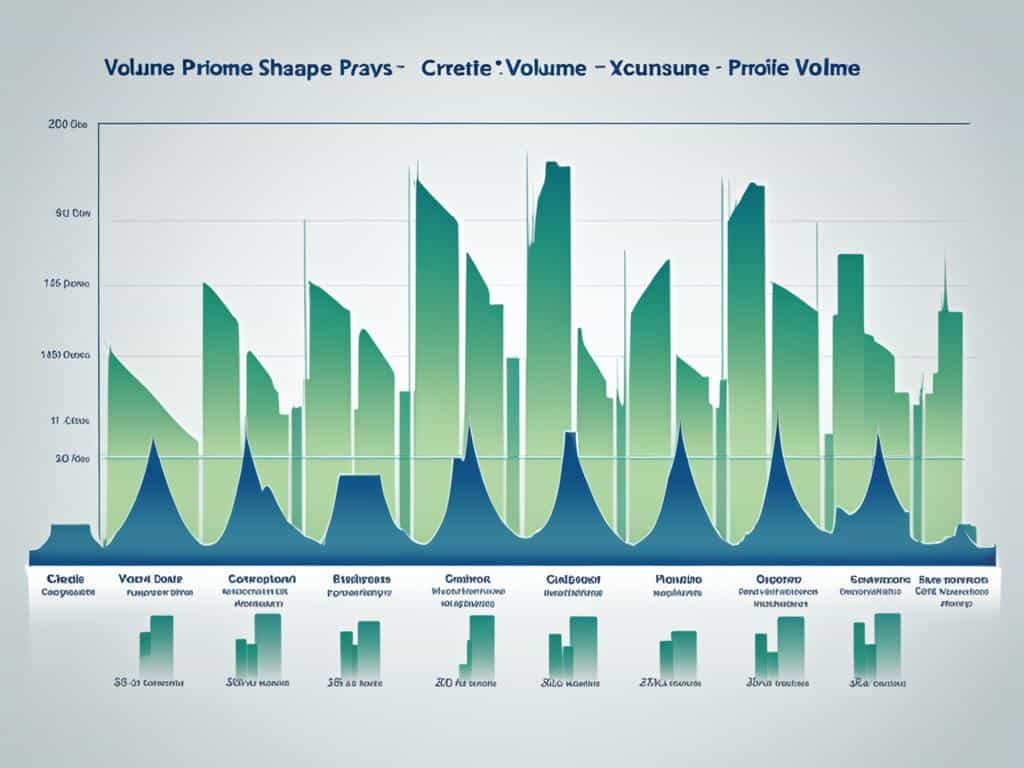
By incorporating volume profile analysis, including the D-shape, b-shape, and p-shape, traders can significantly enhance their trading strategies and improve their overall performance in the market.
Conclusion
Volume analysis is a powerful tool that enables traders to gain deep insights into market trends and make well-informed trading decisions. By understanding the volume profile, value area, and various profile shapes, traders can enhance their trading strategies and gain a competitive edge in the market.
Incorporating volume analysis into trading plans and establishing volume-based rules can significantly improve timing and precision. By recognizing areas of market interest and activity through volume analysis, traders can unlock the potential of market moves and maximize their trading success.
Market trends are often driven by the strength behind volume activity, and volume analysis provides the necessary tools to identify and capitalize on these trends. By carefully analyzing volume patterns, traders can position themselves advantageously in the market and adapt their strategies to changing market dynamics.
Trading strategies based on volume analysis are highly effective in navigating the dynamic nature of the market. By leveraging the knowledge gained from volume analysis, traders can make informed decisions, identify potential breakout opportunities, and accurately predict trend reversals.
FAQ
What is volume analysis?
Volume analysis is the process of analyzing the distribution of traded volume across different price levels during a specific period. It helps traders make informed trading decisions by providing insights into market interest and activity.
What is the volume profile?
The volume profile refers to the graphical representation of traded volume across different price levels within a specified time frame. It provides insights into market sentiment, support and resistance levels, and potential trend reversals.
How can I customize volume profile analysis?
You can customize volume profile analysis by adjusting parameters such as price range, time frame, and number of periods considered. This allows you to tailor the analysis to your specific trading needs.
What is the value area?
The value area is the price range that encompasses a significant portion of trading activity. It helps traders understand where market participants perceive value and where prices tend to gravitate.
What are volume profile shapes?
Volume profile shapes emerge based on the trading behavior of market participants. The D-shape indicates consolidation or sideways movement, the b-shape suggests a preference for short entries after a significant downward move, and the p-shape indicates a preference for long entries following an upward surge.
How can volume analysis enhance my trading strategies?
By incorporating volume analysis into your trading plans and setting volume-based rules, you can improve timing and precision in your trades. Volume analysis helps discern the strength behind market trends, leading to better trading decisions.
How can volume analysis help me unlock market moves?
Volume analysis provides valuable insights into areas of market interest and activity, helping traders understand market dynamics. By understanding volume profiles, value areas, and different profile shapes, you can gain a competitive edge and unlock the potential of market moves.
Source Links
- https://ultimamarkets.medium.com/using-volume-analysis-to-identify-reversals-and-continuations-fe60fadaae9c
- https://www.uctrading.coach/post/an-introduction-to-the-volume-profile
- https://www.forbes.com/sites/tomaspray/2011/09/24/unlocking-chart-secrets-with-volume/
